%20(2)-2.png?width=2551&height=852&name=innosphere-logo-reverse%20(1)%20(2)-2.png)
.png?width=50&name=image%20(34).png)
.png?height=200&name=TRM%20graphic%20BLOG%20(490%20x%20316%20px).png)
Why Great Managers Don't Have a Favourite Leadership Style Think about the best manager you've ever...
Most organizations know they have a retention problem. Far fewer know why. The answer lives at the intersection of your culture, your roles, and the people you're bringing in. Here's how to align all three.
They track turnover rates, conduct exit interviews, and maybe even run engagement surveys. But they rarely step back to ask the more important question: are we hiring people who are genuinely set up to succeed and stay here?
The answer usually lives at the intersection of three things: your culture, your roles, and the people you're bringing in. When those three are aligned, retention tends to take care of itself. When they aren't, no amount of perks, pay bumps, or ping-pong tables will fix it.
This post walks through how to assess your organization's culture honestly, what to do with that assessment, and how to use it to build an employee persona a strategic hiring tool that helps you find people who won't just fill a seat, but thrive, grow, and stay.
Step 1: Understand What Culture Fit Actually Means
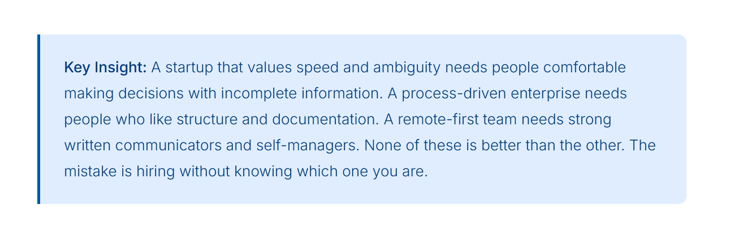
Before you can assess your culture, you need a clear-eyed understanding of what culture fit actually is and what it isn't. Culture fit refers to how well a person's values, working style, communication habits, and behaviors align with the norms and environment of a team or organization. In practice, it answers questions like:
- Does this person collaborate the way we expect?
- Will they thrive in our pace and structure?
- Do their attitudes toward feedback, ownership, and teamwork match ours?
- Will working together feel productive and sustainable for both sides?
What culture fit is not: hiring people who are "just like us," filtering based on personality similarity or social comfort, or excluding people who think differently and challenge assumptions.
Step 2: Assess Your Culture Honestly
Most organizations think they know their culture. Many are wrong or at least, only half-right. There's often a gap between the culture leadership believes exists and the one employees actually experience day to day. A meaningful culture assessment has to look at both.
Audit Your Stated Values
Start with what's written down. Review your mission, values, and any formal documentation about how the organization operates. Then ask hard questions:
- Are these values visible in how decisions are made at the top?
- Would a new employee discover these values on their own through observation?
- Are there values listed that no one would actually defend in a tough moment?
Values that look good on a website but don't show up in behavior aren't culture they're marketing. Your real culture is what people experience when things get hard.
Listen to Your Employees
The people doing the work every day are your most accurate data source. Use a mix of channels to get honest signal:
- Anonymous engagement surveys (especially around autonomy, belonging, growth, and management)
- Stay interviews with high performers not just exit interviews with people already leaving
- Team retrospectives or open forums with psychological safety
- Patterns in Glassdoor reviews, even when they sting
Look for themes, not outliers. If multiple people independently describe the culture as fast-paced and chaotic, that's data. If several mention that their manager micromanages, that's data. If everyone says they feel trusted and supported, that's data too.
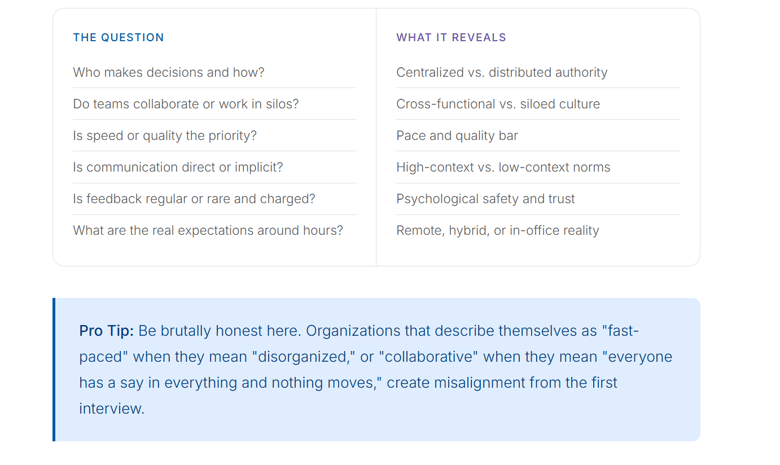
Map How Work Actually Gets Done
Beyond values and sentiment, assess the structural realities of your environment. The questions below reveal your culture more accurately than any values document will:
Identify Your Cultural Non-Negotiables
Every organization has behaviors or orientations that, if absent, will cause friction regardless of skill level. These non-negotiables become the cultural spine of your employee persona:
- High ownership people who hold themselves accountable without being managed
- Direct communication no passive-aggression or office politics
- Comfort with ambiguity thriving when the path isn't fully clear
- Client-first mindset genuine care for the people you serve
- Continuous learning curiosity and a drive to grow
Step 3: Understand What Misalignment Costs You
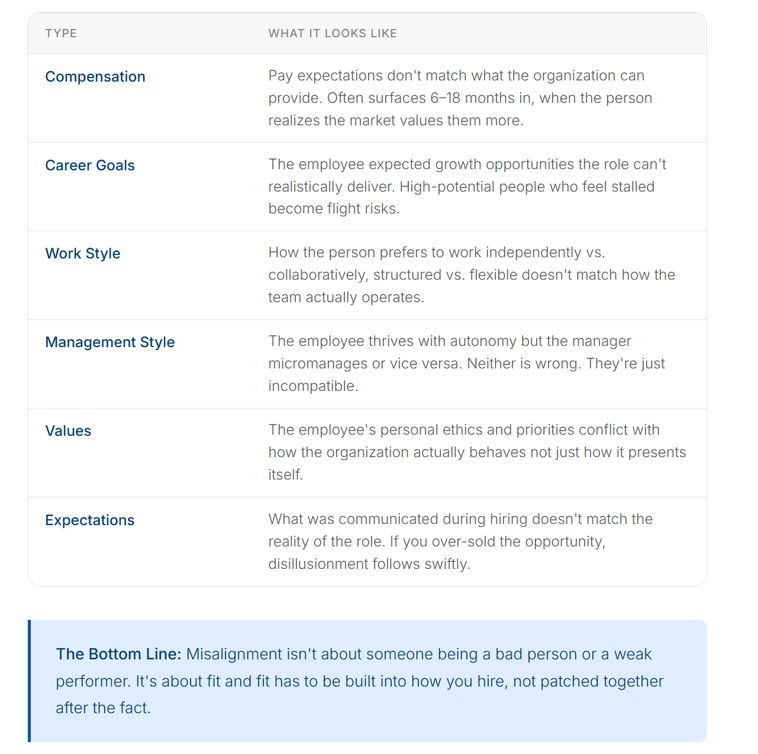
Retention problems are almost always misalignment problems in disguise. When the wrong person is in the wrong role or organization, everyone feels it but the organization often can't name it. Here are the most common forms and how they erode retention:
Step 4: Define What Strong Job Fit Looks Like
While culture fit describes how someone works and what they value, job fit describes whether they can actually do the work. Both matter, and both must be clearly defined before you build your persona. Job fit is evaluated across three dimensions:
1. Can they do the job? Do they have the technical skills, domain knowledge, and experience to perform core responsibilities at the expected level?2. Have they done it before? Does their track record demonstrate similar work, successfully delivered in comparable contexts?
3. Will the role challenge them appropriately? Is it neither so far below their capability that they'll disengage, nor so far above it that they'll struggle?
Be specific. Vague job requirements produce vague hiring decisions. Your persona needs to define the exact experience, skills, and competency level that will set someone up to succeed not just to pass an interview.
Step 5: Build Your Employee Persona
With your culture assessment and job fit definition in hand, you're ready to build the employee persona a detailed, semi-fictional profile of the ideal person for a specific role. It goes far beyond a job description, capturing not just what someone can do, but how they think, what they value, and what they need from an employer to thrive.
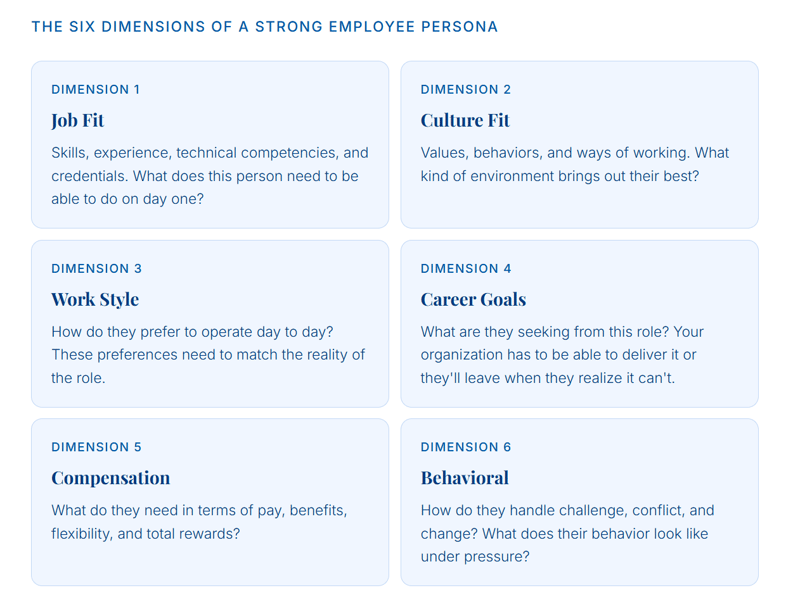
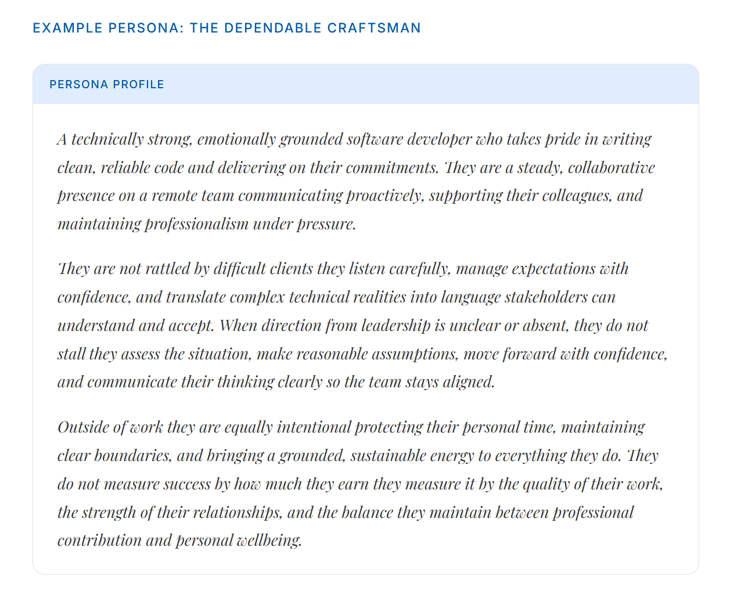
Notice what this persona does: it tells you not just what skills to look for, but what kind of human being fits this role. That's what makes it useful in a hiring conversation.
Step 6: Use the Persona to Hire
A persona is only as valuable as how consistently it's used. Here's how to put it to work in your hiring process:
1. Align every interviewer on the persona before the process begins not just the job description. Everyone should be evaluating the same attributes.2. Build interview questions that specifically probe culture fit, work style, and behavioral attributes not just technical skills.
3. Use the persona as a calibration tool when debriefing candidates. Don't ask "did you like them?" ask "how do they map to the persona?"
4. Be honest in your offer process about what the role, culture, and growth path actually look like. Misrepresentation is a retention liability from day one.

Leave a Comment!